Will AI Replace Agile and Scrum Masters?
Learn how Scrum Masters can use AI to automate daily ceremonies, generate executive dashboards without coding, and orchestrate autonomous code agents to 2x delivery speed.
Session Questions
- Could you give a brief intro about your professional background?
- Is the role of a Scrum Master going to diminish or evolve?
- How is AI transforming traditional Agile workflows?
- What is the difference between a coding assistant and a code agent?
- Will humans become a bottleneck in the new AI-accelerated Agile flow?
- How are organizations measuring the ROI of these AI tools?
- How are Scrum Masters specifically leveraging AI in their daily ceremonies?
- What practical tools are being used to build rapid MVPs without coding?
The Core Argument
Guided by host Sanjay Saini, IT delivery leader Mohit Budhiraja argued that AI is not going to replace Agile methodologies or Scrum Masters; rather, it will aggressively accelerate them. Mohit emphasized that the era of slow, manual administrative work is ending. By leveraging autonomous code agents and automated clustering tools, Agile teams are shifting their focus away from pure process management and toward complex, user-centric delivery. The professionals who survive will be those who adapt to orchestrating these agents rather than competing with them.
“AI won't replace Agile; it will change how the teams work. It is shifting focus from process management to complex, user-centric delivery.” Mohit Budhiraja (06:57)
Detailed Answers
1. Could you give a brief intro about your professional background?
Mohit brings over 15 years of comprehensive IT experience, having played nearly every role in the delivery lifecycle. He began his career as a developer before progressively moving into roles as a Tech Lead, Scrum Master, Service Delivery Manager, and Program Manager. This diverse background allows him to analyze the impact of AI on the entire value stream, rather than from just a single technical perspective.
2. Is the role of a Scrum Master going to diminish or evolve?
Just as Robotic Process Automation (RPA) automated manual testing but didn't eliminate Quality Assurance, AI will evolve the Scrum Master role. Mohit explained that administrative tasks—like manually typing out meeting notes or chasing developers for status updates—will vanish. Scrum Masters must adapt to these new tools, transitioning into leaders who manage intelligent, automated workflows and focus purely on team coaching and stakeholder alignment.
3. How is AI transforming traditional Agile workflows?
The traditional two-week process of documenting an epic, slicing it into user stories, and bringing it to Sprint Planning is being fundamentally compressed. Today, Product Owners provide a single prompt to an AI agent, which generates a structured backlog in minutes. Human developers then collaborate with autonomous coding agents to build the code, and automated testing agents validate it. Agile remains, but the speed of the sprint has drastically increased.
4. What is the difference between a coding assistant and a code agent?
Mohit clarified this crucial distinction. A coding assistant (like standard GitHub Copilot) acts as a peer sitting next to you, suggesting syntax in real-time while you type. A code agent (like Cursor or Claude integrated environments) acts as an autonomous developer. When given a complex prompt, a code agent will independently create the required files, define the architecture, execute CLI commands, and even resolve its own compilation errors.
5. Will humans become a bottleneck in the new AI-accelerated Agile flow?
Sanjay raised the concern that if AI generates a week's worth of code in four hours, the human tech lead reviewing that code becomes a massive bottleneck. Mohit agreed but noted that humans will transition to "human-in-the-loop" authorization nodes. AI will handle Business-as-Usual (BAU) execution and initial automated code reviews, while human leaders will act exclusively as quality gates for critical financial transactions and production deployments.
6. How are organizations measuring the ROI of these AI tools?
According to McKinsey studies cited by Mohit, organizations are already seeing coding and documentation workflows speed up by 2x. While there is an initial productivity dip due to the learning curve, subsequent data shows that 73% of developers report feeling more "in the flow" when utilizing generative tools, as the friction of manual bug-hunting and boilerplate documentation is entirely removed.
7. How are Scrum Masters specifically leveraging AI in their daily ceremonies?
Mohit detailed several practical use cases. Scrum Masters are using tools like Otter.ai during Sprint Planning to instantly generate transcripts and extract actionable items. During Retrospectives, AI is used to cluster team feedback and run sentiment analysis to accurately gauge team morale. Furthermore, tools like Atlassian Robo are being deployed to automatically ping developers for updates, removing the interpersonal friction of a Scrum Master constantly nagging the team.
8. What practical tools are being used to build rapid MVPs without coding?
To prove that non-technical leaders can build software, Mohit provided a live demonstration. Using a tool called Lovable, he built a complete Executive Agile Dashboard UI simply by writing prompts. He then utilized Cursor, acting as a code agent, to build the backend of a fully functional e-commerce website—defining the database schema, pagination, and product pages—in just 25 minutes. Prompt engineering has definitively replaced manual syntax coding for rapid prototyping.
“The core philosophy is this: humans drive creativity, while AI drives scale and consistency.” Mohit Budhiraja (30:59)
Mohit's split between the administrative work AI absorbs and the facilitation work it cannot is the exact line our AI Scrum Master course is built around.

About the Guest
Mohit Budhiraja is a Technology and Delivery Leader with over 15 years of comprehensive IT experience. Having worked across the entire value stream—from development and technical leadership to Scrum Master and Program Manager roles—he specializes in seamlessly integrating intelligent AI automation into traditional Agile delivery frameworks.
Connect on LinkedIn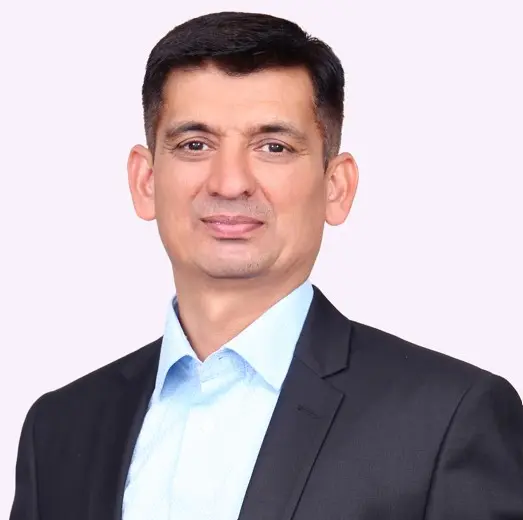
About the Host
Sanjay Saini is the founder of AgileWoW and a leading Agile transformation expert. He hosts the AgileWoW live session series, bringing in industry experts to discuss the practical realities of modern framework adoption and the future of work.
Connect on LinkedInUpgrade Your Agile Toolkit
Administrative management is dead. The Scrum Masters who stay valuable orchestrate AI to handle reporting and summarisation, then spend the reclaimed hours on the facilitation work no model can do. That is what this course trains.
Explore the AI Scrum Master Course