How Quantum Computing Will Change the Global Economy
Learn why the current paradigm of generative AI is hitting a wall of energy consumption, and why quantum mechanics is about to revolutionize computational power and national security.
Session Questions
- Could you give a brief intro about yourself and your background?
- What exactly is quantum computing in layman's terms?
- How do quantum sensors differ from our current technology?
- Will quantum computing completely replace artificial intelligence?
- Will AI models eventually be built directly into quantum systems?
- What skills should students focus on to prepare for the quantum era?
- Are there opportunities in quantum computing outside of pure mathematics?
- Could you tell us about your newly released book on quantum warfare?
The Core Argument
Guided by host Sanjay Saini, Dr. Atul Tripathi argued that the current trajectory of artificial intelligence is fundamentally unsustainable due to its massive energy and water consumption. He explained that while AI represents an "intelligence revolution," quantum technology represents an impending "computational revolution." By allowing states to exist simultaneously in superposition, quantum systems can solve massive logistical, security, and supply chain variables in parallel rather than sequentially. Dr. Tripathi stressed that professionals must pivot back to fundamental sciences to prepare for an era where quantum computing completely transforms decision-making across enterprise environments.
“What quantum computing is today is what artificial intelligence was five years ago, and it will be three years hence.” Dr. Atul Tripathi (06:39)
Detailed Answers
1. Could you give a brief intro about yourself and your background?
Dr. Tripathi is a highly accomplished quantum technologist. He spent over two decades as a data scientist specializing in AI before pivoting to the quantum field nearly four years ago. His distinguished career spans academic research at prestigious institutions (IIT, ISI Kolkata) and high-level consulting for national security within the Prime Minister's Office. He is heavily involved in advising on deep technology policies and has recently authored a book on quantum warfare strategy.
2. What exactly is quantum computing in layman's terms?
Traditional computing operates sequentially on bits representing either a 1 or a 0. Dr. Tripathi used the metaphor of navigating a maze: a classical computer must test a path, hit a dead end, reverse, and try another path. Quantum computing relies on "qubits" in a state of superposition—meaning they can hold both 1 and 0 simultaneously. In the maze analogy, a quantum system creates multiple instances of itself to traverse every single path parallelly at once, collapsing to the correct answer almost instantly.
3. How do quantum sensors differ from our current technology?
Current mechanical sensors lack the fidelity to detect minute changes in their environment. Quantum sensors operate on an entirely different physical plane, capable of detecting microscopic fluctuations in magnetic and electrical fields. Dr. Tripathi highlighted profound applications, such as a quantum sensor tracking underground seismic fluid movements or mapping the unique electrical field generated by an individual human heartbeat, shifting the technology heavily toward medical preservation rather than just destruction.
4. Will quantum computing completely replace artificial intelligence?
No. Dr. Tripathi firmly dispelled the myth that quantum and AI are competing forces. AI generates intelligence by learning from historical data, while quantum mechanics provides extreme computational power. The current limitation of AI models is that they require massive, environmentally unsustainable data centers to compute probabilities. Quantum systems will eventually act as the hardware backbone, providing the immense computational framework necessary to allow AI intelligence to scale efficiently without catastrophic energy costs.
5. Will AI models eventually be built directly into quantum systems?
Yes. Dr. Tripathi confirmed that algorithms are already being developed to marry the two technologies. As commercial quantum systems mature, businesses will stop asking AI simple generative questions and instead use quantum-backed AI to solve multi-variable optimizations. A bank trying to detect trade-based money laundering, or an airline optimizing its entire global routing schedule, requires a richer, probabilistic dataset that only a quantum-driven AI model will be capable of processing.
6. What skills should students focus on to prepare for the quantum era?
The era of basic programming is over. Because AI agents can now write standard software code instantly, Dr. Tripathi urgently advised students and professionals to return to fundamental sciences. The industry is currently desperate for biostatisticians, epidemiologists, physicists, and mathematicians. Professionals who combine a deep understanding of core scientific disciplines with strong computational skills will be the ones who successfully architect the next generation of quantum platforms.
7. Are there opportunities in quantum computing outside of pure mathematics?
Absolutely. The technological shift requires massive strategic translation. Dr. Tripathi outlined high-demand opportunities for consultants who specialize in "quantum readiness assessments," enterprise risk management, and governance policy. Business leaders and public servants do not need to understand linear algebra, but they must understand the economic and security implications of quantum capabilities to design the compliance frameworks necessary to regulate them.
8. Could you tell us about your newly released book on quantum warfare?
Dr. Tripathi recently published a book titled *Quantum Era Warfare*, examining how quantum technologies will fundamentally rewrite military strategy and global conflict. Highlighting the gravity of the subject, the book was publicly launched by major national figures including Narayana Murthy (co-founder of Infosys) and former Chiefs of Naval Staff. The text argues that failing to adopt quantum defenses poses an existential threat to modern national civilizations.
Understanding how extreme computational power changes organizational strategy requires an analytical edge. Learn how to architect robust delivery systems and govern generative tooling in our Artificial Intelligence training program.
About the Guest
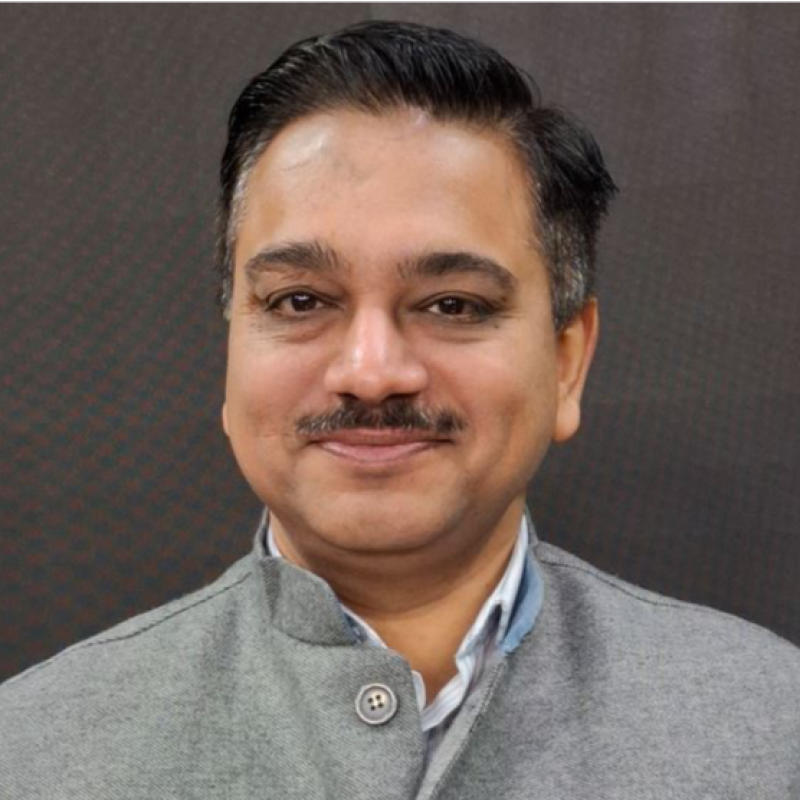
Dr. Atul Tripathi is a leading Quantum Technologist and deep tech consultant with extensive experience spanning academic research and national security. A former data scientist who transitioned fully into quantum mechanics, he advises top-tier government agencies and enterprises on risk management, supply chain optimization, and the integration of quantum infrastructure into advanced AI models.
Connect on LinkedIn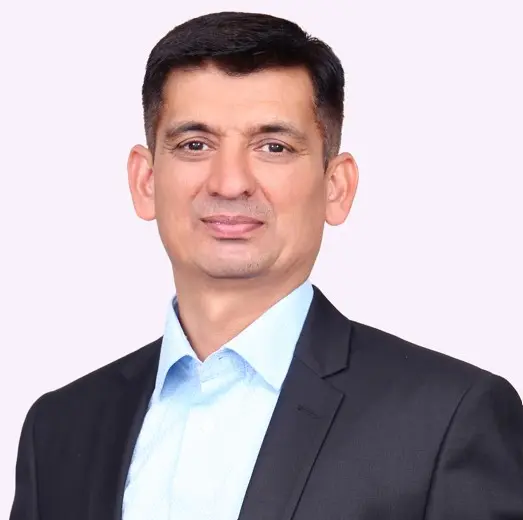
About the Host
Sanjay Saini is the founder of AgileWoW and a leading Agile transformation expert. He hosts the AgileWoW live session series, bringing in industry experts to discuss the practical realities of modern framework adoption and the future of work.
Connect on LinkedInBuild Your Computational Literacy
As the industry shifts from pure software logic toward deep technological architectures, leaders must be able to evaluate massive technical shifts without relying solely on IT teams. Our Artificial Intelligence program trains you in the underlying architecture of data models, prompt engineering, and framework governance.
Explore the Artificial Intelligence Program