Why Do AI Transformations Fail at the Human Level?
Understand the biological threat response behind tech resistance, why AI cannot replace emotional intelligence, and how to lead organizational change without triggering massive backlash.
Session Questions
- Could you share a quick intro about yourself and your expertise?
- How does change management differ in Agile versus a technical AI transformation?
- Why do employees generally resist the adoption of new AI tools?
- What are the top things leadership should avoid during an AI transformation?
- How does change management adapt when AI poses a direct threat to jobs?
- How should employees proactively approach change rather than resisting it?
- How can emotional intelligence increase productivity and cut costs?
- What are the top three things you do to kick off a new transformation assignment?
The Core Argument
Guided by host Sanjay Saini, enterprise change consultant Satyavrat Nirala argued that AI transformations fail precisely because organizations treat them as technology rollouts rather than human behavioral shifts. Satyavrat stated that while AI processes information faster, it entirely lacks the emotional intelligence necessary to address organizational fatigue, stress, and resistance. Forcing AI top-down for mere operational efficiency inherently triggers biological threat responses in employees. Leaders must stop ruling from outside the system and actively endure the discomfort of change alongside their teams.
“Emotion trumps reason. If people are emotional about what they are building, you don't need a top-down structure.” Satyavrat Nirala (26:44)
Detailed Answers
1. Could you share a quick intro about yourself and your expertise?
Satyavrat is a SAFe Practice Consultant who transitioned from a developer and tester mindset into organizational design and enterprise change consulting. Over the past decade, he has supported federal governments in Saudi Arabia and the US, alongside various European organizations. His primary focus is mapping human behavioral changes, utilizing emotional intelligence to guide teams through complex organizational transitions.
2. How does change management differ in Agile versus a technical AI transformation?
Agile adoption was gradual, but AI adoption is brutally fast. Satyavrat warned that treating AI strictly as a path to operational efficiency frequently backfires. When leadership forcefully implements AI tools without ensuring they integrate comfortably into the daily workflow of the employees, adoption stalls. AI is merely a fast-processing tool; it cannot replace the human habituation required to make an organizational design function effectively.
3. Why do employees generally resist the adoption of new AI tools?
People inherently resist change due to the biological fear of failure or replacement. Satyavrat explained that humans are hardwired to respond to immediate threats. When an employee is forced into an abrupt role transition via new technology, they perceive it as an individual threat, not a company benefit. If this emotional gap is too wide, the easiest coping mechanism for a human is simply to ignore the change to protect their current status quo.
4. What are the top things leadership should avoid during an AI transformation?
Sanjay and Satyavrat agreed that the biggest anti-pattern is leaders demanding change while refusing to actively participate in it. Leaders cannot expect to spin a wheel, magically deploy AI, and stay comfortably outside the organizational struggle. Additionally, leadership must never treat humans as a simple demand-and-supply equation; they must respect individual learning curves and offer employees active choices in how they adapt.
“They want the change, but they want someone to implement it without them being involved. How is that possible?” Satyavrat Nirala (14:08)
5. How does change management adapt when AI poses a direct threat to jobs?
Satyavrat stated that a change consultant must deliver the harsh truth: certain roles involving basic pattern identification will be eliminated. However, because AI accelerates business output, it inherently spawns entirely new job functions. The goal of an organization is not mass replacement, but guiding employees into these new roles. He reframed the narrative, advising workers to view AI simply as their new calculator, processing foundational work so they can focus on higher-value problem-solving.
6. How should employees proactively approach change rather than resisting it?
Citing Rogers' innovation curve, Satyavrat noted that many employees resist because adopting a new mental model requires immense intellectual energy. People prefer the comfort of their established routines. However, ignoring the change until it directly impacts their livelihood is a fatal strategy. Employees must embrace acquired learning, aggressively seeking to rewire their thinking to adapt before the market forces the transition upon them.
7. How can emotional intelligence increase productivity and cut costs?
Satyavrat explained that if a workforce feels a deep, positive connection to what they are building, productivity scales naturally without the need for strict, top-down enforcement. He criticized the reliance on AI for human management; an AI can run a keyword sentiment analysis, but it cannot comprehend mental fatigue, stress, or depression. Direct human coaching and emotional connection are the only ways to build a highly productive, harmonious organization.
Satyavrat's emphasis on leading with emotional intelligence rather than top-down mandates is a foundational principle of our Agile Leadership and Change Management program.
8. What are the top three things you do to kick off a new transformation assignment?
First, Satyavrat traces the target company's twenty-year digital history using web archive tools, understanding exactly what they have previously added and eliminated. Second, he performs a strict self-audit to determine which specific areas of the business he is actually competent enough to support, avoiding the trap of promising to fix everything. Finally, whenever he brings leadership a set of three problems, he ensures he arrives with ten fully developed solutions.
About the Guest
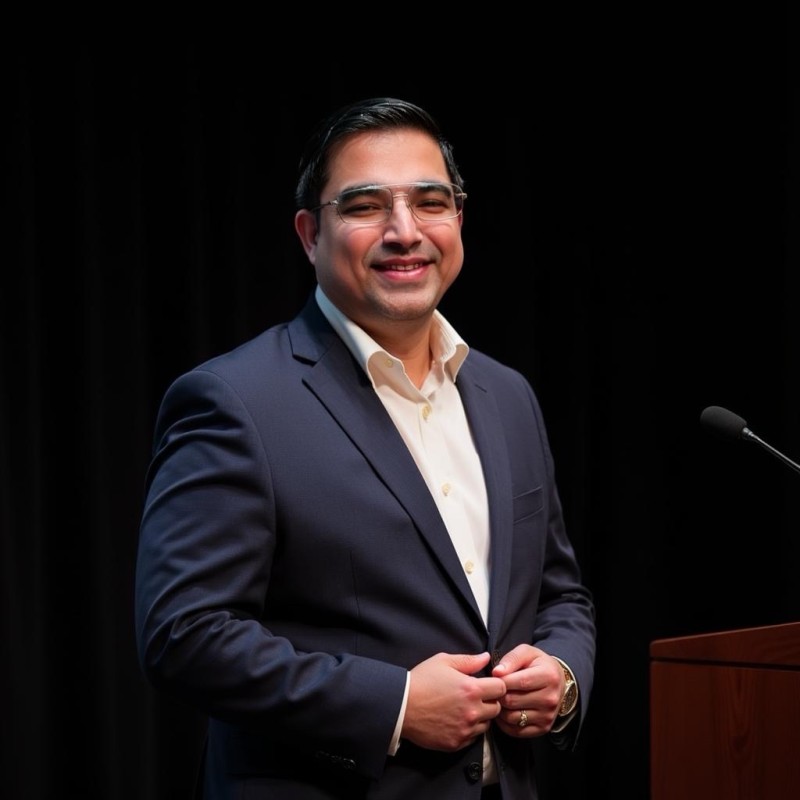
Satyavrat Nirala is an enterprise change consultant and SAFe Practice Consultant who moved from a developer and tester background into organizational design. Over the past decade he has guided large, complex transitions for federal governments in Saudi Arabia and the United States, as well as European enterprises. His work centres on mapping human behavioural change, prioritizing emotional intelligence over pure technological mandates.
Connect on LinkedIn
About the Host
Sanjay Saini is the founder of AgileWoW and a leading Agile transformation expert. He hosts the AgileWoW live session series, bringing in industry experts to discuss the practical realities of modern framework adoption and the future of work.
Connect on LinkedInLead Change From Inside It
Transformations stall when leaders mandate change they aren't willing to sit through themselves. Our Agile Leadership and Change Management program works on the harder half — reading resistance, respecting learning curves, and building the emotional connection that makes adoption stick.
Explore the Agile Leadership Program